
Data Analyst Jobs in India: Salary, Skills & Eligibility
Introduction
Data has become one of the most valuable resources for modern businesses. Companies use data to understand customers, improve products, reduce costs, measure performance, and make better decisions. Because of this, the demand for professionals who can collect, organize, and understand data has increased significantly.
For people interested in technology, business, mathematics, or problem-solving, data analyst jobs can offer an attractive career path. These opportunities are available across industries such as IT, banking, healthcare, e-commerce, consulting, finance, marketing, and telecommunications.
If you are planning to start a career in data analytics, this guide explains what a data analyst does, the required qualifications, important skills, salary expectations, job opportunities, and ways to enter the profession.
What is a Data Analyst?
A data analyst is a professional who studies data to identify useful information, patterns, trends, and business insights. The main purpose of a data analyst is to transform raw information into something that managers and organizations can understand and use.
For example, an e-commerce company may want to know which products sell the most, which customers are returning, or why sales dropped during a particular month. A data analyst examines the available information and helps answer these questions.
Because almost every industry now works with digital information, data analyst jobs are no longer limited to technology companies.
What Does a Data Analyst Do?
The daily responsibilities of a data analyst depend on the company and industry. However, most analysts spend their time collecting, cleaning, analyzing, and presenting data.
Typical responsibilities include:
- Collecting data from different sources
- Cleaning incorrect or incomplete data
- Using spreadsheets, SQL, or other tools to analyze information
- Finding trends and patterns
- Creating dashboards and reports
- Preparing charts and visualizations
- Explaining findings to managers and business teams
- Helping companies make data-driven decisions
A good analyst does more than work with numbers. They must also understand what the business is trying to achieve.
Types of Data Analyst Jobs
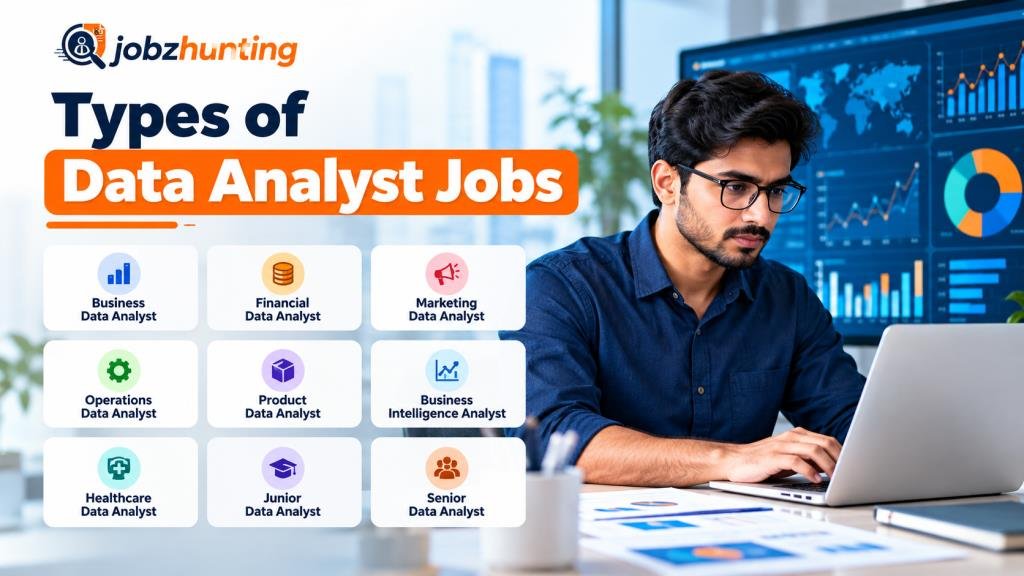
There are several types of data analyst jobs available in India. Job titles often vary depending on the industry and the type of data involved.
Common positions include Data Analyst, Junior Data Analyst, Business Data Analyst, Financial Data Analyst, Marketing Analyst, Operations Analyst, Product Analyst, Business Intelligence Analyst, and Senior Data Analyst.
Some professionals specialize in areas such as healthcare analytics, financial analytics, customer analytics, supply chain analytics, or digital marketing analytics.
Therefore, learning data analytics skills can open opportunities in many different industries rather than limiting you to one specific career path.
Data Analyst Jobs for Freshers
Freshers can apply for entry-level data analyst jobs, especially when they have practical skills and a strong portfolio.
Many employers look for candidates who understand Excel, SQL, data visualization, and basic statistics. Some current entry-level job listings in India also accept candidates with 0–2 years of experience or freshers who can demonstrate strong technical projects.
Freshers can improve their chances by completing internships, online courses, personal projects, and certifications. Creating dashboards or analyzing publicly available datasets can also demonstrate practical ability to recruiters.
Eligibility for Data Analyst Jobs
There is no single educational qualification required for every data analyst position.
Employers commonly hire candidates with degrees in fields such as:
- Computer Science
- Information Technology
- Statistics
- Mathematics
- Economics
- Finance
- Engineering
- Business Administration
However, candidates from other educational backgrounds can also enter the profession by developing relevant technical and analytical skills.
Employers generally care about whether you can work with data, solve problems, communicate findings, and use the required tools effectively.
Skills Required for Data Analyst Jobs
Candidates applying for data analyst jobs need a combination of technical and soft skills. Important technical skills include data cleaning, SQL, spreadsheet analysis, statistics, data visualization, reporting, and basic programming.
Soft skills are equally important. Analysts need problem-solving ability, logical thinking, attention to detail, communication skills, and business understanding. Employers want analysts who can explain complex findings in simple language because managers may not always have a technical background.
Tools Used by Data Analysts
Learning the right tools can greatly improve your chances of getting a data analyst position.
Microsoft Excel is one of the most widely used tools for organizing, cleaning, calculating, and analyzing information. SQL is important because companies often store large amounts of information in databases.
Power BI and Tableau are commonly used for dashboards and data visualization. Python is also valuable for automation, advanced analysis, and handling larger datasets.
Current Indian job listings frequently mention combinations of Excel, SQL, Power BI, Tableau, and Python, showing that these remain important skills in the market.
You do not need to master every tool before applying. Strong knowledge of Excel, SQL, and one visualization platform can provide a solid starting point.
Data Analyst Salary in India
Salary is one of the main reasons many people search for data analyst jobs in India.
According to Indeed’s India salary data updated on September 20, 2026, the average base salary for a data analyst is approximately ₹6.28 lakh per year. Indeed reports that salaries can vary substantially depending on experience, company, location, and responsibilities.
Entry-level professionals generally earn less, while experienced analysts with advanced SQL, Python, business intelligence, and visualization skills may command significantly higher salaries.
Candidates should therefore treat average salary figures as estimates rather than guaranteed compensation.
Best Cities for Data Analyst Jobs
Some Indian cities offer particularly strong opportunities for analytics professionals. Bengaluru is one of the largest technology and startup hubs in India. Hyderabad also has a strong presence of technology, consulting, and multinational companies.
Other important locations include Gurugram, Noida, Pune, Mumbai, Chennai, and Delhi. Current LinkedIn listings show data analytics and business intelligence roles across cities including Bengaluru, Hyderabad, Pune, Gurugram, and Chennai.
Instead of limiting yourself to one city, consider searching across multiple locations and remote opportunities.
Remote Data Analyst Jobs
Remote work has created additional opportunities for analytics professionals. Many tasks performed by data analysts, such as SQL analysis, report preparation, dashboard creation, and data visualization, can be completed online.
Remote data analyst jobs may be suitable for professionals who prefer flexible work arrangements or live outside major technology hubs.
However, remote positions can also attract more applicants. Candidates should therefore have strong communication skills, time-management ability, and familiarity with collaboration tools.
How to Get a Data Analyst Job Without Experience
Getting your first job can feel difficult when employers ask for experience. The best solution is to create practical experience yourself. Start by learning Excel, SQL, Power BI or Tableau, and basic statistics.
Next, work on small projects. You could analyze sales data, customer behavior, financial information, marketing performance, or public government datasets.
Upload your work to GitHub, create dashboards, or build a simple online portfolio. Internships, freelance projects, volunteering, and academic projects can also strengthen your profile.
For entry-level data analyst jobs, demonstrated skills can sometimes be more valuable than simply listing certificates.
Learn More: Daily 100 Rupees Earning App Without Investment
How to Create a Data Analyst Resume

Your resume should clearly show employers what you can do. Include relevant technical skills such as Excel, SQL, Python, Power BI, Tableau, or statistics. Mention projects where you cleaned data, created dashboards, discovered trends, or generated useful insights.
Instead of writing only general responsibilities, explain results whenever possible. For example, rather than saying “Created dashboards,” you could write that you created a sales dashboard that tracked monthly revenue, product performance, and customer trends.
Keep the resume simple, professional, and relevant to the specific data analyst position you are applying for.
Data Analyst Interview Questions
Interviews for data analyst jobs may include both technical and general questions. You may be asked about SQL queries, Excel formulas, data cleaning, dashboards, statistics, or previous projects.
Common interview questions include:
- What is the difference between WHERE and HAVING in SQL?
- How do you handle missing data?
- What is a pivot table?
- How would you explain a dashboard to a non-technical manager?
- Which data visualization would you use for a particular situation?
- Tell us about a data project you completed.
Before an interview, review your projects carefully because recruiters may ask you to explain your process and decisions.
Where to Find Data Analyst Jobs
There are several places where candidates can search for data analyst jobs in India. Popular platforms include LinkedIn, Indeed, Naukri, Foundit, company career pages, and internship websites.
LinkedIn and Indeed currently show thousands of listings connected with data analysis, SQL, Power BI, Tableau, Excel, and Python skills in India. Use job alerts and apply regularly. It is also useful to connect with recruiters and professionals working in analytics-related roles.
Career Growth After Becoming a Data Analyst
A data analyst role can lead to several career paths. With experience, you may become a Senior Data Analyst, Business Intelligence Analyst, Analytics Consultant, Product Analyst, Analytics Manager, or Data Scientist.
Some analysts move toward data engineering, while others specialize in business strategy, finance, marketing, or product analytics.
Career growth usually depends on your technical skills, industry knowledge, communication ability, and experience solving real business problems. Continuously learning new tools and working on more complex projects can help you move into higher-level positions.
Frequently Asked Questions
Is data analyst a good career in India?
It can be a strong career option for people who enjoy working with numbers, technology, problem-solving, and business information. Analytics roles are available across many industries.
Can freshers apply for data analyst jobs?
Yes. Freshers can apply for junior and entry-level positions if they have relevant skills, projects, internships, or certifications.
Is coding compulsory for a data analyst?
Advanced coding is not required for every role. However, learning SQL is highly recommended, and basic Python knowledge can improve your career opportunities.
Which tool should I learn first?
Beginners can start with Excel, followed by SQL and either Power BI or Tableau. Python can be added after learning the fundamentals.
Can I become a data analyst without a technical degree?
Yes. Candidates from different educational backgrounds can enter data analytics by developing technical skills and creating a strong project portfolio.
What is the average data analyst salary in India?
Indeed reported an average base salary of approximately ₹6.28 lakh per year in India as of September 20, 2026. Actual pay depends on experience, location, company, and skill level.
Conclusion
The growing use of data across industries has created opportunities for people who can turn information into useful business insights. Data analyst jobs can be suitable for freshers as well as experienced professionals who want to build a career in analytics.
To get started, focus on developing practical skills in Excel, SQL, data visualization, and basic statistics. Build projects, create a professional resume, prepare for technical interviews, and apply consistently.
You do not need to learn everything before starting your job search. A strong understanding of the fundamentals, combined with practical projects and continuous learning, can help you take your first step toward a successful data analytics career.