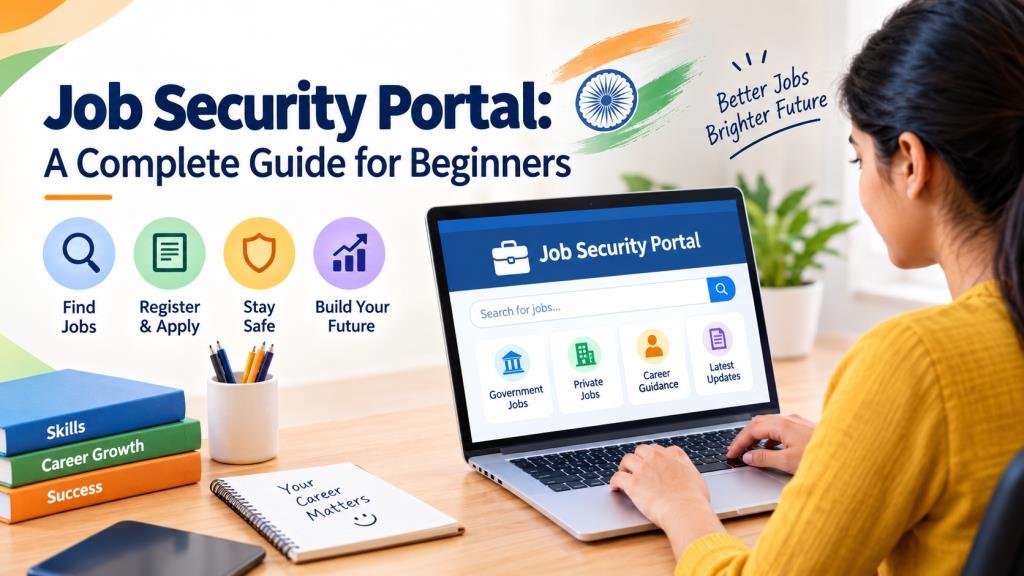
Job Security Portal: A Complete Guide for Beginners
Introduction
Finding a suitable job can be challenging, especially for beginners who are entering the workforce for the first time. Many job seekers struggle to find reliable vacancies, understand application procedures, and identify genuine employers. This is where a job security portal can be helpful. It can make the job search process more organised by bringing employment information, recruitment announcements, and career resources together in one place.
In India, online job platforms help candidates explore government and private-sector opportunities without visiting multiple offices. However, it is important to choose a trustworthy website and understand how it works. In this guide, you will learn about job security portals, their features, registration procedures, application processes, and ways to avoid recruitment scams.
What Is a Job Security Portal?
A job security portal is an online platform that helps people access employment information and explore job opportunities. Depending on the website, it may provide vacancy announcements, eligibility requirements, application links, career guidance, and recruitment updates.
For Indian job seekers, such platforms can be useful when searching for employment in fields such as education, banking, healthcare, information technology, administration, and customer service. Some portals focus on government recruitment, while others list private-sector vacancies.
It is important to understand that the term does not necessarily refer to one specific official website. Before registering, check the portal’s identity, ownership, and purpose to ensure it offers the services you need.
How Does a Job Security Portal Work?
A job security portal generally collects or publishes employment information and allows users to search for suitable vacancies. The exact process depends on the platform.
First, a job seeker visits the website and searches for opportunities based on qualifications, location, experience, or job category. After finding a suitable vacancy, the candidate reviews the job description, eligibility criteria, salary information, and application deadline.
If the candidate meets the requirements, they can follow the stated application procedure. Some websites accept applications directly, while others redirect users to an employer’s official recruitment page.
A job security portal may also provide application updates or notifications. However, candidates should always confirm important details through the official employer or recruiting authority.
Key Features of a Job Security Portal
A useful job security portal may include several features that simplify the job search process.
- Job listings: Information about available positions across different industries.
- Search filters: Options to narrow results by location, qualification, experience, or job type.
- Recruitment notifications: Updates about new vacancies, deadlines, and selection procedures.
- Application guidance: Instructions explaining how to complete and submit applications.
- Eligibility details: Information about educational qualifications, age limits, and experience requirements.
- Career resources: Resume tips, interview preparation advice, and other job-search support.
Not every portal offers all these features. Reviewing the available services before creating an account can help you decide whether the platform suits your needs.
Benefits of Using a Job Security Portal
One major advantage of using a job security portal is convenience. Instead of searching through numerous websites individually, candidates can use organised listings to discover relevant employment opportunities.
These platforms can also save time by providing essential vacancy details in one place. Search filters help users focus on positions that match their qualifications and career interests.
Another benefit is improved access to recruitment information. People living in smaller towns or rural areas may find online resources useful when exploring opportunities in different parts of India.
However, using a portal does not guarantee employment or job security. Success still depends on qualifications, competition, application quality, and the employer’s selection process.
How to Register on a Job Security Portal
Registration procedures vary between websites, but the general process is straightforward.
- Visit the website’s verified official address.
- Select the registration or sign-up option, if an account is required.
- Enter the requested details, such as your name, email address, and mobile number.
- Create a strong password and complete any required verification.
- Add your educational qualifications and employment details if requested.
- Review your information before submitting the registration form.
Some portals allow visitors to search for jobs without creating an account. Never provide unnecessary personal information, banking passwords, or one-time passwords to an unverified website.
How to Log In to a Job Security Portal
After registration, users can usually log in by opening the portal’s official website and selecting the login option. Enter your registered email address or username and password to access your account.
Depending on the platform, you may be able to update your profile, save vacancies, manage job alerts, or review submitted applications.
If you forget your password, use the website’s official password recovery process. Avoid accessing your account through suspicious links received in unsolicited emails or messages. Logging in through the verified website helps protect your personal information.
How to Search for Jobs on a Job Security Portal
To find relevant vacancies, start by identifying the type of work you want. Enter a job title, skill, department, or preferred location in the search field.
Next, use available filters to narrow the results. For example, a recent graduate might search for entry-level positions in their city, while an experienced candidate may look for jobs requiring specific technical skills.
Read each vacancy carefully before applying. Check the eligibility criteria, required documents, salary details, application deadline, and recruitment method. Saving suitable listings and maintaining a simple application tracker can help you manage multiple opportunities.
Government Jobs and Private Jobs Available Online
A job security portal may help candidates explore government or private-sector vacancies, depending on its coverage.
Government recruitment can include positions in public administration, railways, banking, education, defence-related services, and other departments. Applicants must follow the relevant recruitment authority’s notification, eligibility rules, examination requirements, and application deadlines.
Private-sector opportunities may include jobs in IT, sales, marketing, healthcare, finance, manufacturing, and customer support. Employers may assess candidates through interviews, practical tests, or other selection methods.
For government recruitment, verify announcements through official government or recruiting-authority websites. For private jobs, check the employer’s official careers page before sharing documents or paying any requested fees.
Eligibility Criteria and Documents Required
Eligibility depends on the specific vacancy rather than the job security portal itself. Requirements may include educational qualifications, age limits, work experience, language skills, technical knowledge, or professional certifications.
Commonly requested documents include:
- Educational certificates and mark sheets.
- A current resume or CV.
- Proof of identity, where officially required.
- Recent photographs, if specified.
- Experience certificates for relevant positions.
- Category or other supporting certificates when applicable.
Not every application requires all these documents. Read the official notification carefully and submit only the information requested through a verified application channel.
How to Apply for Jobs Through an Online Portal
Once you find a suitable vacancy, open the full job advertisement and confirm that you meet its requirements. Prepare your resume and supporting documents before starting the application.
Complete the application form accurately, check your contact information, and upload documents in the specified format. Review everything before submitting the form.
If the application is handled through another website, make sure it belongs to the employer or authorised recruiting body. Save the confirmation message or application reference number for future use. Submitting an application does not automatically mean you have been shortlisted.
How to Check Job Application Status
Some portals provide an application dashboard where candidates can track recruitment progress. Log in to your account and look for sections labelled application history, submitted applications, or recruitment status.
Possible status messages include submitted, under review, shortlisted, or rejected. Their meanings may differ between employers.
If no update appears, consult the recruitment notification for information about selection dates and communication methods. Check your registered email and messages regularly, but do not trust anyone who promises selection in exchange for money.
Tips for Finding Reliable Job Opportunities in India
A careful approach can help you avoid misleading listings and improve your job search. Always verify vacancies through the employer’s official website or authorised recruitment authority. Read the complete notification instead of relying only on social media posts or short advertisements.
Keep your resume updated, apply before deadlines, and focus on positions that match your skills. Use a professional email address and prepare for interviews in advance.
You should also compare job details across reliable sources and keep records of your applications. A job security portal is a useful starting point, but checking information independently is essential.
Learn More: Central Government in India 2026: Jobs, Schemes & Guide
How to Identify Fake Job Portals and Recruitment Scams
Fake job websites may advertise unrealistic salaries, guarantee employment, or demand money for interviews and appointments. Some scammers impersonate well-known companies or government departments to gain applicants’ trust.
Be cautious if a recruiter pressures you to act immediately, requests payment to secure a job, or asks for banking credentials or an OTP. Check the website address, employer contact details, and official recruitment notice before proceeding.
Legitimate recruitment procedures vary, and some official applications have prescribed fees. Pay only when a fee is clearly stated by the verified recruiting authority and use its authorised payment channel. Never pay an unknown person for a guaranteed job.
Common Problems When Using a Job Security Portal
Users may experience login failures, slow websites, incomplete listings, or difficulty uploading documents. These issues can sometimes be resolved by checking the internet connection, updating the browser, or reviewing file-size and format requirements.
If a portal is temporarily unavailable, try again later and check for official announcements. If an application deadline is approaching, use the verified recruitment authority’s contact information to seek guidance.
Never share your password or OTP with someone claiming they can fix your account. If a portal repeatedly displays suspicious information, stop using it until its authenticity can be verified.
Is a Job Security Portal Useful for Beginners?
Yes, a reliable job security portal can be useful for beginners because it helps them discover vacancies, understand eligibility requirements, and organise their applications. It can also introduce new job seekers to different industries and career paths.
However, beginners should not depend on a single platform. Combining verified job listings with skill development, resume preparation, networking, and interview practice can improve their overall job search.
The best approach is to use online portals as information resources while independently checking every important recruitment detail.
Frequently Asked Questions About Job Security Portal
What is a job security portal?
A job security portal is a website or online service that helps users access employment information, job listings, or recruitment resources. Its exact services depend on the platform.
How can I register on a job security portal?
Visit the verified website, select the registration option if available, provide the required details, and complete any necessary verification.
Are job security portals free to use?
Many portals allow free job searches, but some services or recruitment applications may involve fees. Check the official terms and never pay an unverified person for employment.
Can I find government jobs through online portals?
Yes. Some platforms publish government job notifications. Always verify vacancies, eligibility rules, and application procedures through the relevant official recruitment authority.
How do I check my job application status?
Log in to the relevant portal and check your application dashboard, if available. Otherwise, follow the status-checking instructions provided in the official recruitment notification.
How can I identify a genuine job portal?
Check its official web address, ownership, contact information, and published vacancy details. Verify job advertisements with the employer and be cautious of guaranteed-job promises or suspicious payment requests.
Conclusion
A job security portal can make the employment search process more organised by helping candidates discover vacancies, review eligibility requirements, and understand application procedures. For beginners in India, these platforms can provide a useful starting point for exploring government and private-sector opportunities.
However, choosing a trustworthy website and verifying every important detail are essential. Keep your documents ready, apply for suitable positions, and stay alert to recruitment scams. By combining a reliable job security portal with consistent preparation and practical skills, you can take more confident steps towards your career goals.